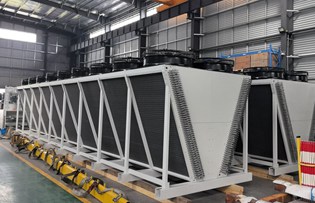
HENGAN “Little Sun Charity Fund” Completes Warm-Hearted Support Event for Disabled Children
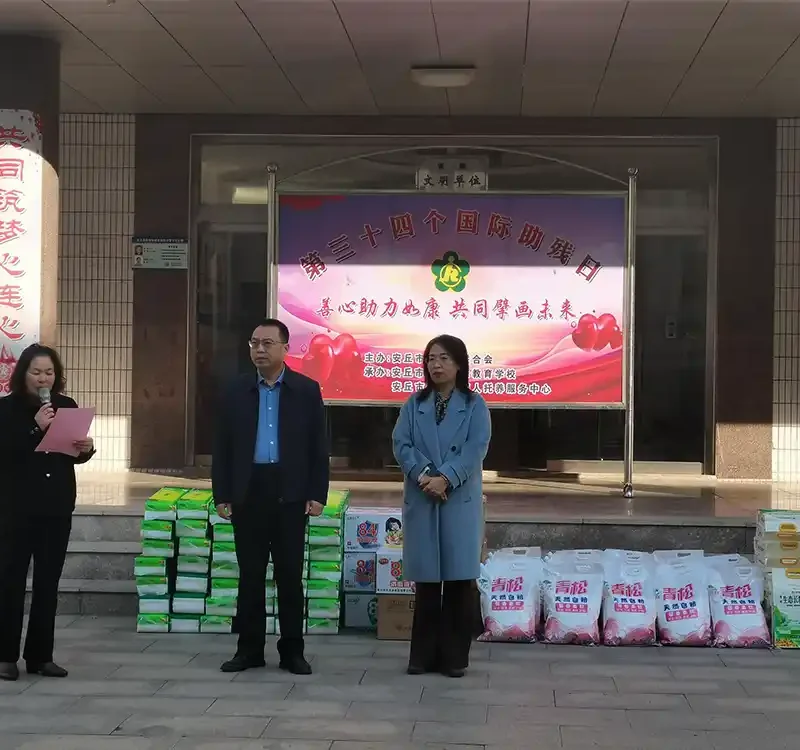

HENGAN “Little Sun Charity Fund” Completes Warm-Hearted Support Event for Disabled Children

Date: 2025-11-22 On the 34th International Day of Persons with Disabilities, HENGAN successfully concluded its annual “Little Sun Charity Fund” support activity in Anguang City Special Education School. The event, jointly organized with the Municipal Disabled Persons’ Federation and the local Women’s Federation, was created to deepen public welfare participation among our employees and to bring practical care to children with special needs . A Public-Welfare Initiative Rooted in Responsibility HENGAN believes that the value of an enterprise is not defined solely by commercial growth, but by the impact it creates through long-term and sincere social responsibility. The “Little Sun Charity Fund,” established by HENGAN years ago, aims to help vulnerable groups, support educational needs, and encourage more employees to take part in charitable community activities. The 2025 event officially started at 9:30 AM on November 22 at Anguang City’s Special Education School. Leaders from the Disabled Persons’ Federation, school representatives, and HENGAN volunteers attended the opening. During the ceremony, school leaders expressed gratitude and encouraged companies like HENGAN to continue promoting inclusive education and social awareness. Delivering Practical Support to Children in Need After the opening speech, company representatives brought daily necessities and care supplies funded by the “Little Sun Charity Fund,” including winter clothes, hygiene products, learning mat...

Read More

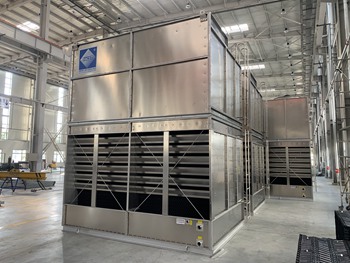
Cross Flow Open Cooling Tower Applied in Pharmaceutical Manufacturing — A Real-World Case Study with Practical Insights


Cross Flow Open Cooling Tower Applied in Pharmaceutical Manufacturing — A Real-World Case Study with Practical Insights

Cooling systems in pharmaceutical manufacturing usually sound like something “secondary” in the whole process, but anyone familiar with pharma production knows that stable cooling actually sits at the center of process reliability. In this particular project, our team supplied a Cross Flow Open Cooling Tower to a pharmaceutical plant producing both intermediates and finished dosage forms. What seemed like a simple equipment upgrade turned out to be a valuable lesson in how cooling performance affects compliance, batch stability, and overall production efficiency. View our Open Cooling Tower solutions Why This Pharmaceutical Client Needed a Change Before contacting us, the client had been operating an older cooling tower system that often produced inconsistent return-water temperatures—sometimes only 1 or 2°C fluctuations, but in pharma manufacturing this small difference can influence reaction stages, fermentation cycles or solvent recovery processes. Several times per month the plant had to slow down parts of the operation simply because the cooling performance wasn’t steady enough. During the early conversations, the client only described the issue as: “We need something more stable, and easier for our engineers to maintain.” But after on-site inspection, the real situation became clearer: the older unit had uneven water distribution, scale buildup, drifting water droplets, and a fan speed control system that was too primitive for their temperature-sensitive operations....

Read More

Upgrading Cooling at a Malaysian Chicken Plant: Why 304 Stainless Coils Made All the Difference


Upgrading Cooling at a Malaysian Chicken Plant: Why 304 Stainless Coils Made All the Difference

Cooling equipment in poultry plants doesn’t have an easy life. Steam, chemical foam cleaning, chicken oil vapor, and long operation hours… they all add up. So when a major chicken processing facility in Malaysia decided to retire its old evaporative condensers, reliability & hygiene were top priorities. The factory chose to install four HACST evaporative condensing units with stainless steel 304 coils and casing. Not only as a “replace the old box” project, but also as a move to future-proof their refrigeration system against corrosion problems they faced earlier. The old machines? Well, they were from another well-known brand, but after years of washing cycles and humid working vibe, the frames had stains, coil surface corrosion, and scale buildup. It wasn’t a total failure, just… slow losing efficiency, costing more energy, and making the maintenance team tired dealing with coil flushing quite often. https://www.hengancooling.com/wp-content/uploads/2025/10/hacstcooling.mp4 Why Stainless Steel 304 (Instead of Galvanized) Was the Key Choice Food plants in hot Southeast Asia need cooling gear that can survive rough treatment. This is where **304 stainless steel coil bundle** gives a big advantage: Very good corrosion resistance against chlorine and detergents Better hygiene — which poultry export factories must care about More stable heat exchange even if the environment is humid and greasy Longer lifespan with fewer shutdowns The plant cleaning team actually m...

Read More

HACST Cooling Tower Re-Certified by CTI, Ensuring Continued Global Reliability


HACST Cooling Tower Re-Certified by CTI, Ensuring Continued Global Reliability

Date: October 17, 2025 We are delighted to announce that our Closed Circuit Cooling Tower has once again been officially re-certified by the Cooling Technology Institute (CTI) in 2025. This successful re-certification highlights our ongoing dedication to thermal performance accuracy, product reliability, and energy-efficient design. https://www.hengancooling.com/wp-content/uploads/2025/10/CTI认证通过.mp4 At HACST Cooling, we view CTI certification not as a single milestone, but as a continuous standard that drives our innovation. Since our first CTI certification years ago, we have kept investing in advanced testing, improved coil technology, and optimized water circulation systems to ensure our cooling towers deliver consistent and verifiable performance in every project. With the renewed CTI certification, our Closed Circuit Cooling Towers continue to serve global industries — including power generation, manufacturing, and process cooling — with proven quality and trust. We remain committed to providing our partners worldwide with reliable, high-efficiency, and CTI-certified cooling solutions. HACST Cooling — Proven Performance. Certified Again.

Read More

Vietnam Cold Storage Project – ZHX-2820 Evaporative Condenser
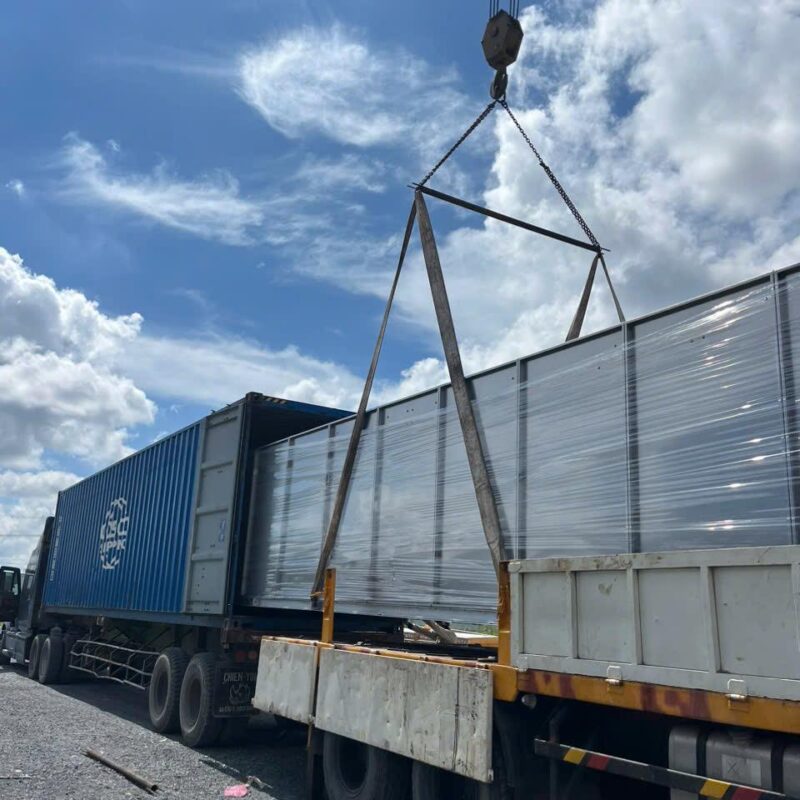

Vietnam Cold Storage Project – ZHX-2820 Evaporative Condenser

In early 2025, HACST Cooling successfully delivered and installed a ZHX-2820 Evaporative Condenser for a client in Vietnam. The unit arrived directly at the cold storage facility, as you can see from the project site photo. This case demonstrates how modern evaporative condensers improve cold storage efficiency in Southeast Asia. Project Background Vietnam has been one of the fastest growing economies in Asia, with seafood, fruits and frozen products forming a major part of its export. Cold storages are essential to guarantee product quality before shipping worldwide. However, many traditional cooling systems in Vietnam consume too much electricity and water. The client’s old unit was no longer reliable, and downtime directly meant financial loss. Therefore, the decision was made to replace it with ZHX-2820 condenser. About the ZHX-2820 Evaporative Condenser The ZHX-2820 is designed for large cold storage applications and industrial refrigeration. Some of its technical highlights include:   Cooling capacity above 2800 kW, ideal for ammonia-based refrigeration. Heavy-duty axial fan system with optimized airflow distribution. Hot-dip galvanized steel and optional stainless-steel casing – ensuring long service life in humid climate. Energy saving compared with conventional shell & tube + cooling tower system. Modular structure for easier transportation and site assembly. Installation at the Cold Storage Site When the equipment reached the client’s site, the main ...

Read More

Modular Cooling Tower Supports CSSC’s Hydrogen Production Project

Modular Cooling Tower Supports CSSC’s Hydrogen Production Project

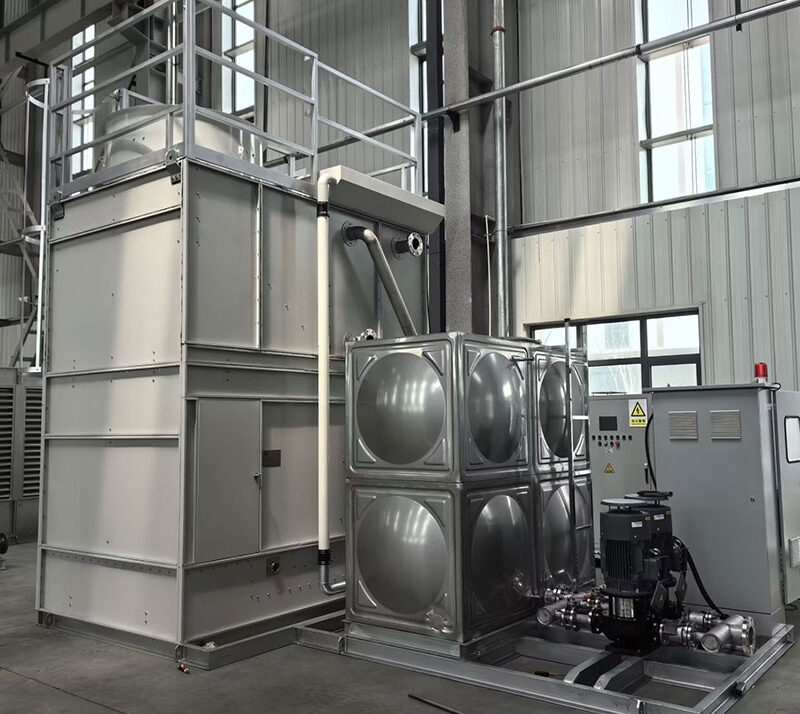
HACST Cooling has recently completed the supply of a  modular closed circuit cooling tower for a hydrogen production plant belonging to China State Shipbuilding Corporation (CSSC). The project is a significant milestone in introducing reliable cooling equipment into the new hydrogen energy sector. Reliable Cooling for Hydrogen Equipment The hydrogen production process involves high thermal loads from the electrolysis equipment and compressors and must be cooled by an efficient and stable cooling system. Our modular closed cooling tower was selected because of its compact footprint, ease of installation, and because it is a skid-mounted water system. This assures the equipment of ideal thermal conditions even under round-the-clock industrial loads. Main Characteristics of Modular System Pre-assembled in the factory: Reduces on-site installation time and labor. Water tank, pump, and control cabinet integrated: Plug-and-play for industrial applications. Corrosion-resistant structure: Stainless steel water system and anti-corrosion coating for harsh operating conditions. Smart control: PLC control system to automatically adjust fan speed and water flow. The entire system was delivered in modular form, minimizing on-site work and enabling fast commissioning at the customer’s hydrogen plant. This is fitting in the fast development cycle of clean energy projects, where reliability and speed are both crucial. Serving the Clean Energy Industry Through this project, HACST Coo...

Read More

FKH-600X2 Open Cooling Tower in a Pharmaceutical Glass Manufacturing Project


FKH-600X2 Open Cooling Tower in a Pharmaceutical Glass Manufacturing Project

At a state-owned factory producing pharmaceutical glass in China, the demand for efficient cooling in the industrial water loop was the priority. The production project of high-quality medical glass required a cooling tower to fit a flow of 600 m³/h of water, inlet water temperature of 37°C, outlet temperature of 32°C, and wet bulb temperature of 28°C. Our FKH-600X2 open cross-flow cooling tower was utilized for the purpose. The FKH series is an open cross-flow steel-structured cooling tower with mature technology and stable performance that is well known. It is produced with high-quality components, and its design and performance quality is far superior to the national standards GB7190.1-2008 and GB7190.2-2008 for fiberglass-reinforced plastic cooling towers. Its heavy-duty construction and high heat exchange efficiency made it the perfect choice for the pharmaceutical glass factory’s tough conditions, where stable cooling is essential to maintain production quality. The installation was simple. The FKH-600X2 was mounted on a pre-prepared concrete base, and it was running fully within a couple of days. The tower’s cross-flow design helped provide effective heat dissipation, holding the circulating water at the desired 32°C. On-site personnel noted how quietly it ran, which was an appreciated aspect in the busy plant environment. The steel frame and tough components withstood the environments well despite the high humidity and constant use. Since its launch, ...

Read More

Evaporative Condenser


Evaporative Condenser

How does Evaporative Condensing Work? Evaporative condensing functions by harnessing the cooling power of evaporation to enhance the heat dissipation process. This is achieved by spraying water onto the condensing coil from above, while simultaneously blowing air up through the coil from below. This natural process effectively lowers the condensing temperature. Consequently, the compressor workload is reduced.   This results in improved system efficiency and significantly lower energy consumption compared to air-cooled alternatives. Notably, the decreased compressor kW draw (by 25-30%) combined with potential demand charge savings (up to 30% of a utility bill in certain scenarios) can lead to operational cost reductions exceeding 40% when compared to air-cooled condensers.   What are the advantages of employing an evaporative condenser in refrigeration applications?   An evaporative condenser represents a remarkable advancement in refrigeration processes, offering numerous benefits. Firstly, it serves as a comprehensive solution by integrating the functions of both a cooling tower and a condenser, streamlining the system’s design. This consolidation minimizes the space required for installation, particularly advantageous in facilities with limited space availability.   Moreover, the system’s energy efficiency is noteworthy. By harnessing the natural process of evaporation to cool the refrigerant, an evaporative condenser consumes less energy...

Read More

What is evaporative cooling?


What is evaporative cooling?

In the field of refrigeration, there is a device that is vividly called “evaporative cooling”, the full name of which is evaporative condenser. It is like an efficient magician, which can magically transform gaseous refrigerators into liquids, providing indispensable cooling support for many industries. First, let’s explore why evaporative cooling is so named. In the internal structure of evaporative cooling, a circulating water pump is hidden in the lower part. This water pump is like a beating heart, constantly transporting water to the top of the refrigerator inlet. Then, the water is sprayed on the surface of the internal pipe, as if covering the pipe with a layer of cool water curtain. When this water encounters the high-temperature refrigerant in the pipe, a wonderful “evaporation” phenomenon takes place. The refrigerant begins to evaporate under the catalysis of high temperature, and the temperature of the refrigerant drops rapidly during this process. At the same time, the fan on the top of the evaporative cooling also joins this “performance”, blowing strongly, driving the air to flow faster. This flowing air is like a diligent cleaner, constantly taking away the water vapor near the water surface, further reducing the partial pressure of water vapor, and providing a continuous source of power for the continuous evaporation of water. Under a certain pressure, as the heat of the refrigerant continues to be lost, the thermal...

Read More

Working principle of dry cooler


Working principle of dry cooler

The working principle of dry cooler is mainly based on the principle of heat exchange. Specifically, there is a circulating refrigerant flowing through the pipes inside the dry cooler, and these pipes are usually designed as a structure with efficient heat dissipation. When the high-temperature refrigerant flows through these pipes, the fan or natural wind outside the pipe will blow the air over the surface of the pipe to form a heat exchange. In this process, the refrigerant transfers heat to the outside air through the pipe wall, so that the temperature of the refrigerant is reduced, thereby achieving the cooling effect. The outside air warms up because it absorbs the heat of the refrigerant, and is then discharged or dissipated naturally. This heat exchange process is carried out continuously, and the refrigerant circulates in the dry cooler, continuously releasing heat, thereby keeping its temperature at a low level. In this way, the dry cooler can effectively reduce the temperature of the liquid and achieve the purpose of cooling. It should be noted that the dry cooler does not consume water during operation, so its water-saving performance is very obvious. At the same time, since the heat exchange is carried out through the air, the dry cooler will not produce water mist or water droplets during operation, so that it can also be used in some environments with high humidity requirements. In general, the dry cooler uses the principle of heat exchange and the temperatur...

Read More

The difference between dry cooler and condenser


The difference between dry cooler and condenser

1. Definition and working principle of dry cooler and condenser Dry cooler and condenser are both important components of air conditioning system. Their function is to cool the high temperature and high pressure gas generated by the compressor into liquid, change the state of the refrigerant, and thus achieve the cooling effect. Dry cooler, also known as air cooler, is a device that uses a fan to force air cooling on the high temperature and high pressure gas discharged from the compressor. Its working principle is to introduce the refrigerant gas discharged from the compressor into the dry cooler through a pipeline, and then contact the aluminum fins arranged in the air duct through the internal copper tube, and use the fan to force air cooling to quickly cool the refrigerant gas and turn it into a liquid state of refrigerant in the evaporator. The condenser is one of the most critical components in the refrigeration system besides the compressor. It is mainly used to condense the refrigerant gas into liquid and reduce the workload of the compressor. Its working principle is to directly exchange heat between the refrigerant gas in the condenser and the outside world through the condensing tube, so that the refrigerant gas is quickly cooled and turned into a liquid state of refrigerant inside the condenser. 2. Differences between dry coolers and condensers Although both dry coolers and condensers cool refrigerant gas into liquid, there are still some differences between th...

Read More

Comparison of water cooling and evaporative cooling


Comparison of water cooling and evaporative cooling

Evaporative condenser: The principle of evaporative condenser is to use the evaporation of part of the water to take away the heat released by the condensation process of gas refrigerant. Its shell is a rectangular box of thin steel plate, which contains condensing coil group, water sprinkling device, water retaining fence, water collecting tray at the bottom, circulating water pump outside the box, centrifugal fan or axial fan on the top or side of the box. In addition, there is a float valve in the water tray. When the water is continuously evaporated and the water level in the water tray is too low, the float valve will automatically open to replenish cooling water. Refrigeration system cycle: Compressor exhaust Evaporative cooling condenser Throttling Evaporator Compressor suction External environment Water-cooled condenser: After the circulating cooling water is cooled by the cooling tower, it is pumped into the condenser to cool the high-temperature refrigerant, and then returned to the cooling tower for cooling. Refrigeration system cycle: compressor exhaust water-cooled condenser throttling evaporator compressor suction Water-cooled cooling tower 2 External environment Evaporative cooling and the external environment are primary heat exchange, and water-cooled condenser and the external environment are secondary heat exchange, so evaporative cooling can obtain a smaller heat exchange temperature difference. 2. Advantages and disadvantages analysis Advantages: 1. Co...

Read More

Are closed circuit cooling towers the same as evaporative condensers?


Are closed circuit cooling towers the same as evaporative condensers?

Closed cooling towers and evaporative condensers (evaporative cooling for short) are two common cooling devices in industry. What are the similarities and differences between the two? 1. From the appearance From the appearance, the closed cooling tower and the evaporative condenser are made of the same material and have a very similar structure. In a sense, the closed cooling tower is an evaporative condenser. 2. Differences in working principles The closed cooling tower is a heat exchange device that removes heat by cooling the heat medium in the tower. It uses two circulating cooling methods that are completely isolated from the inside and outside. Through multiple heat exchanges between spray water and cold air, the temperature in the tower is reduced, and then the latent heat of vaporization is used to cool the internal circulating water. Evaporative condenser is a device that uses the principles of evaporation and condensation to complete heat transfer. Evaporative condensers are usually used in refrigeration and air conditioning systems to cool high-temperature and high-pressure steam into liquid. Its working principle is that by placing high-temperature and high-pressure steam in the condenser, the steam will dissipate heat and gradually cool down, thereby turning into a liquid. 3. Different heat transfer methods The closed cooling tower cools by transferring heat between the spray water and the cooled medium. The evaporative condenser uses the heat transfer during ...

Read More

Matters Needing Attention in Cooling Tower Engineering Application


Matters Needing Attention in Cooling Tower Engineering Application

Notes for Applications 1.Install location: Closed Circuit Cooling Towers requires abundant supply of fresh air to flow through the air inlets. If the cooling tower is located near to the wall or it is put in a sealed space, you have to take actions to make sure the searing, saturated air will not turn around and flow into the air inlets again. 2.Compatibility of the liquid(gas) The fluid(gas) to be cooled must be compatible with the coil material. Otherwise it will undermine or corrode the condensing coils. In addition, the coils require high-pressure water cleaning or mechanical cleaning. So the coils must be designed to adapt to this case. 3.Pipes and valves The pipe must be designed and installed in accordance with the design standard. All pipes must be supported by piping hangers or other supporting equipment. External stop valve may be required if the system requires to isolate individual units. 4.Fluid(Gas) capacity control The performance of majority equipment vary dues to the change of its environment wet bulb temperature. Therefore, fluid(gas) capacity control is required to make up for the temperature deviation of fluid(gas) due to the environment temperature difference. The easiest way to control capacity is to make sure the periodic running of the fan, this is usually applied in multi-fan system or multi-unit system. It is applicable to the application with low requirement for the outlet water temperature since the periodic running is easy to control and is abl...

Read More

Central air conditioning cooling tower, three temperatures determine heat dissipation, why can it cool when the water temperature is lower than the air temperature


Central air conditioning cooling tower, three temperatures determine heat dissipation, why can it cool when the water temperature is lower than the air temperature

In a water-cooled central air-conditioning system, the chiller dissipates heat from the condenser to the outside, and the condensation heat is carried by the cooling water to the cooling tower. After the heat is dissipated by the cooling tower, it is reduced from 37°C to 32°C, and then returns to the condenser of the chiller, so that the heat is circulated by the cooling water system. The heat dissipation of cooling water in the cooling tower depends on three temperatures: the water temperature of the cooling water entering the tower, the dry bulb temperature and the wet bulb temperature of the outdoor atmosphere, which is divided into contact heat transfer and evaporative heat dissipation. 1. Contact heat dissipation Contact heat dissipation is based on the difference between the cooling water temperature and the outdoor air temperature (dry bulb temperature). When the cooling water temperature is higher than the outdoor air temperature, the direct contact between water and air will cause sensible heat transfer based on the temperature difference, and convective heat transfer will also occur between the water surface and the air flow, thereby reducing the temperature of the cooling water. Therefore, the cooling tower is designed with a spray system and a packing layer, and the water flow is dispersed into fine water droplets or thin films, thereby greatly increasing the surface area for heat exchange between water and air, so that the heat in the water can be transferred ...

Read More

การติดตั้งคูลลิ่งทาวเวอร์ในประเทศไทย

การติดตั้งคูลลิ่งทาวเวอร์ในประเทศไทย

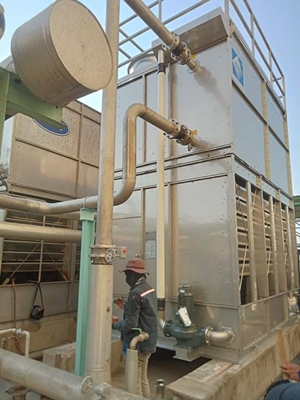
ตั้งแต่ปี 1975 บริษัท HACST Cooling Tower ได้จัดหาคูลลิ่งทาวเวอร์ที่ได้รับการออกแบบทางวิศวกรรมอย่างแม่นยำซึ่งทำงานได้ดีในทศวรรษต่อๆ ไป เทคนิคการออกแบบและการก่อสร้างของเรายึดถือมาตรฐาน CIT อย่างเคร่งครัดตั้งแต่เริ่มแรก เรามีประสบการณ์การก่อสร้างและความเชี่ยวชาญในการก่อสร้างและติดตั้งระบบอย่างกว้างขวาง เรามีประวัติศาสตร์และประสบการณ์มากกว่า 40 ปีในการผลิตคูลลิ่งทาวเวอร์ และเรายังคงวิจัยและพัฒนาผลิตภัณฑ์ของเราต่อไป ผลิตภัณฑ์ที่จดสิทธิบัตรของเราได้รับการยอมรับทั้งในและต่างประเทศ ผลิตภัณฑ์ของเราได้รับการติดตั้งทั่วโลก และมีกรณีโครงการจำนวนมากทั่วโลก เราเป็นสมาชิกของ Refrigeration Technology Institute (CTI) และการออกแบบของเราเป็นไปตามมาตรฐาน CTI

Read More


GET IN TOUCH

Call us at 86-536-6103201 or   Contact us
Top