ZNC Counter Flow Evaporative Condenser with Centrifugal Fans Get a Quote Now

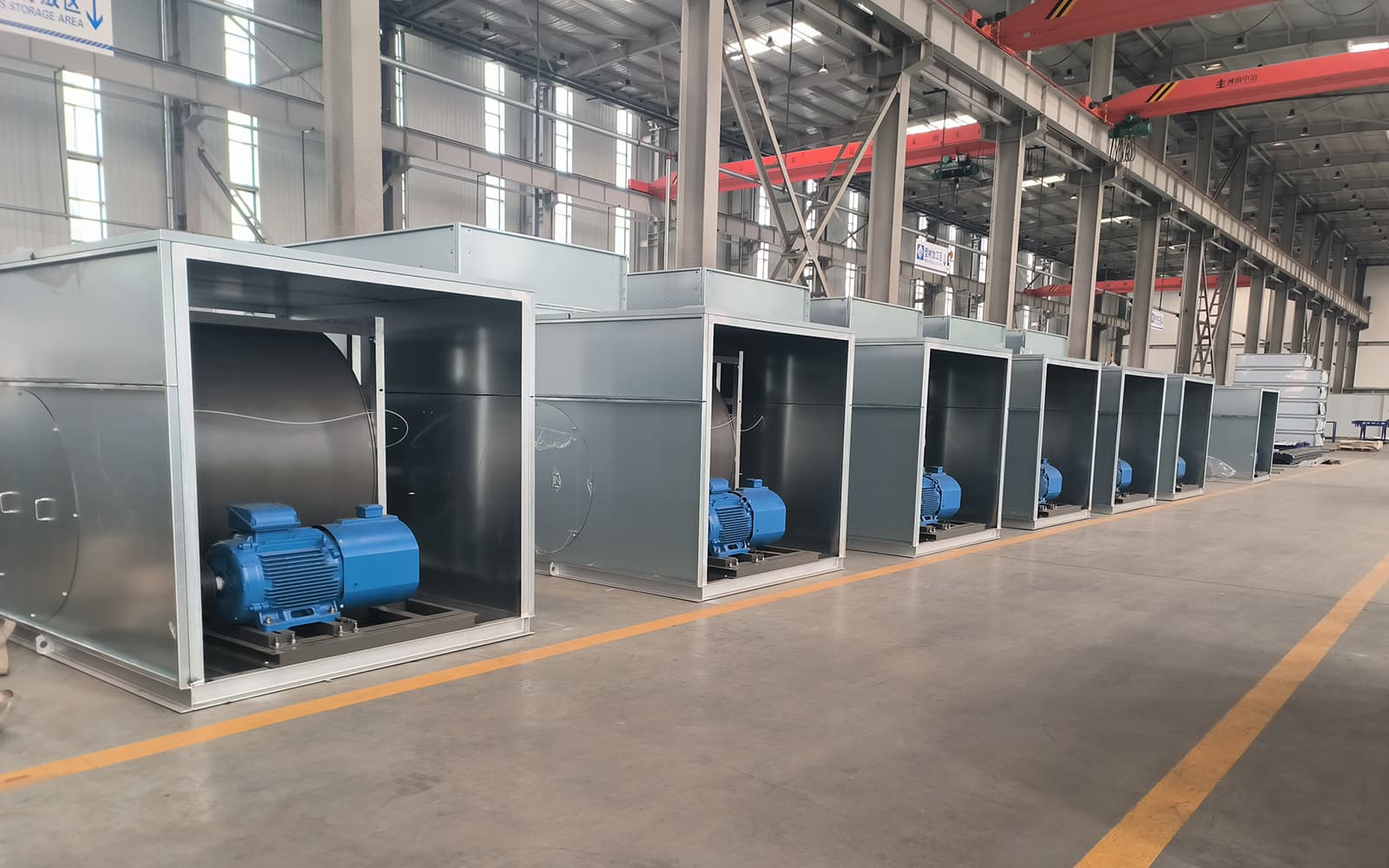

The HACST Evaporative Condenser with Centrifugal Fan is a premium industrial heat rejection solution engineered for demanding refrigeration and process cooling duties in HVAC, cold chain, chemical, pharmaceutical, and data center applications. Combining robust centrifugal air-moving technology with an optimized evaporative heat-exchange coil, HACST evaporative condensers deliver superior capacity, reduced condensing pressure, lower energy use, and improved part-load performance under harsh site conditions.
1. Product Overview
Evaporative condensers reject heat by combining sensible air-cooling with controlled evaporative effects. HACST’s design integrates centrifugal fans for high static pressure and reliable airflow delivery, compact stainless-steel or copper condenser coils for effective refrigerant-side heat transfer, and engineered water distribution systems to maximize wetting uniformity and heat transfer coefficient. The closed refrigerant circuit condenses vapor inside coil tubes while process water is recirculated over the coil, enabling lower condensing temperatures compared with dry coolers and minimizing refrigerant compressor work.
2. Working Principle
Refrigerant vapor from the compressor enters the condenser coil where warm refrigerant transfers heat to the tube walls. Water sprayed over the coil evaporates and carries away latent heat while air moved by the centrifugal fan removes remaining sensible heat. The evaporative process lowers the coil surface temperature to near wet-bulb conditions, enabling the condenser to achieve lower condensing pressures and improve overall system COP (Coefficient of Performance). HACST systems include drift eliminators and water treatment options to control water carryover and fouling.
3. Why Centrifugal Fan Integration Matters
Integrating centrifugal fans provides several technical advantages over axial designs in evaporative condensers:
- Higher Static Pressure: Centrifugal fans maintain required airflow against resistance from coil packs, silencers, ductwork, or filter arrays.
- Stable Flow with Varying Loads: Better control at differing system curves reduces risk of surging and improves part-load efficiency.
- Lower Sound at Distance: Through selected casing and blade profiles, centrifugal fans reduce tonal noise and allow easier acoustic treatment.
- Flexible Installation: Compact scroll/volute casing simplifies ducting and eliminates long axial fan cones in tight mechanical rooms.
4. Key Components
- Condenser Coil: Copper tube with enhanced fins, or stainless-steel brazed plate designs where chemical compatibility and corrosion resistance are required.
- Centrifugal Fan Assembly: Backward-curved impellers on precision shafts; TEFC motors or explosion-proof options for hazardous locations.
- Water Distribution: Corrosion-resistant spray headers and non-clogging nozzles to ensure uniform wetting and minimize localized dry spots.
- Drift Eliminators: Multi-stage drift eliminators to achieve low drift loss (<0.002% of recirculating flow) when required.
- Basins & Pumps: Sloped basins for complete drainage, centrifugal or submersible pumps sized for NPSH, variable speed drives available.
- Filtration & Water Treatment: Strainers, side-stream filtration, chemical dosing skid options to control scaling, corrosion, and biological growth.
- Controls & Sensors: Integrated BAS/BMS-ready controllers for fan speed, basin level, freeze protection, and pump sequencing.
- Access & Safety: Lockable access doors, service platforms, and safety interlocks for safe maintenance.
5. Design Advantages and Performance Benefits
HACST evaporative condensers are engineered to provide measurable performance benefits:
- Lower Compressor Work: Reducing condensing temperature by a few degrees can decrease compressor power draw significantly — improving system COP.
- Smaller Refrigeration Plant: Higher heat transfer efficiency can permit smaller compressor sizing or increase capacity at existing footprint.
- Part-Load Efficiency: VFD-equipped fans and pumps optimize energy consumption during partial loads and staged operation.
- Durability in Harsh Environments: Corrosion-resistant materials and coatings make HACST suitable for coastal, chemical, and food-processing sites.
- Maintenance-Friendly: Modular coil banks, accessible drift eliminators, and removable fan assemblies reduce downtime for service.
6. Typical Technical Specifications
| Model | Cooling Capacity (KW) | Fan Quantity | Fan Power(kw) | Per Unit Airflow (m³/h) | Pump Quantity | Pump Power | Per Unit Water Flow (m³/h) | Dimension |
| ZNC-175 | 175 | 1 | 4 | 26000 | 1 | 1.1 | 50 | 1930*1700*3390 |
| ZNC-220 | 220 | 1 | 5.5 | 32000 | 1 | 1.1 | 50 | 1930*1700*3610 |
| ZNC-260 | 260 | 1 | 5.5 | 32000 | 1 | 1.5 | 70 | 2820*1700*3190 |
| ZNC-340 | 340 | 1 | 7.5 | 35000 | 1 | 1.5 | 70 | 2820*1700*3410 |
| ZNC-410 | 410 | 1 | 7.5 | 35000 | 1 | 1.5 | 70 | 2820*1700*3630 |
| ZNC-520 | 520 | 1 | 11 | 60000 | 1 | 2.2 | 100 | 3290*1840*3430 |
| ZNC-650 | 650 | 1 | 11 | 64000 | 1 | 2.2 | 100 | 3290*1840*3650 |
| ZNC-750 | 750 | 1 | 18.5 | 90000 | 1 | 3 | 150 | 3870*2200*3960 |
| ZNC-950 | 950 | 1 | 22 | 100000 | 1 | 3 | 150 | 3870*2200*3960 |
| ZNC-1150 | 1150 | 1 | 22 | 100000 | 1 | 3 | 150 | 3870*2200*4170 |
| ZNC-1200 | 1200 | 1+1 | 7.5+15 | 105000 | 1 | 4 | 180 | 4860*2200*3650 |
| ZNC-1380 | 1380 | 1+1 | 7.5+15 | 120000 | 1 | 5.5 | 233 | 5530*2200*3740 |
| ZNC-1450 | 1450 | 1+1 | 7.5+15 | 105000 | 1 | 4 | 180 | 4860*2200*3870 |
| ZNC-1520 | 1520 | 1+1 | 11+22 | 150000 | 1 | 5.5 | 230 | 6070*2200*3950 |
| ZNC-1650 | 1650 | 1+1 | 7.5+15 | 120000 | 1 | 5.5 | 233 | 5530*2200*3960 |
| ZNC-1750 | 1750 | 2 | 15+15 | 160000 | 2 | 3 | 150 | 6820*2200*3740 |
| ZNC-1850 | 1850 | 1+1 | 11+22 | 150000 | 1 | 5.5 | 230 | 6070*2200*4180 |
| ZNC-2100 | 2100 | 2 | 15+15 | 160000 | 2 | 3 | 150 | 6820*2200*3960 |
| ZNC-2300 | 2300 | 2 | 18.5+18.5 | 180000 | 2 | 3 | 150 | 7650*2200*4170 |
| ZNC-2350 | 2350 | 2 | 22+22 | 200000 | 2 | 3 | 150 | 7650*2200*4170 |
7. Materials and Corrosion Protection
HACST offers material options to meet site-specific corrosion challenges and compliance requirements:
- Standard: Hot-dip galvanized steel casing with epoxy primer for general HVAC environments.
- Marine & Coastal: Stainless steel fasteners, marine-grade coatings, and optional 316L coil materials.
- Acidic/Alkaline Atmospheres: Full stainless-steel or FRP construction and specialty coatings to resist chemical attack.
- Food/Pharma: Smooth-finish stainless steel and hygienic basins designed for washdown and CIP (Clean-In-Place).
8. Controls, VFDs & Smart Integration
Modern thermal plants demand intelligent control. HACST control solutions include:
- VFD Fan Control: Precise airflow control, soft start capability, and reduced inrush currents.
- Adaptive Setpoints: Algorithms that optimize condensing pressure against outdoor wet-bulb and load conditions.
- Remote Monitoring: BACnet/IP, Modbus TCP, and proprietary IoT platforms for performance analytics and predictive maintenance.
- Sequence of Operation: Pump and fan staging for redundancy, freeze protection sequences for cold climates, and alarm escalation paths.
9. Water Management & Sustainability
Responsible water management is central to evaporative condenser design. HACST features:
- Low-Drift Design: Drift eliminators and optimized spray angles to minimize water loss.
- Water Treatment Integration: Side-stream filtration, chemical dosing, and blowdown control to manage cycles of concentration and reduce make-up water.
- Make-Up Water Economizers: Reuse of process condensate where feasible and automation to minimize manual intervention.
- Greywater Compatibility: Designs that accept non-potable water sources with appropriate filtration to reduce freshwater demand.
10. Installation & Commissioning Guidance
Correct installation and commissioning ensure peak lifetime performance:
- Verify structural supports meet load and vibration isolation specifications.
- Provide recommended clearances for air inlet and outlet to avoid recirculation penalties.
- Set pump NPSH and verify suction conditions; install strainer and accessible service valves.
- Balance water distribution and confirm nozzle coverage across coil pack during initial run.
- Program control sequences, run fan and pump soft-start checks, and record baseline operating data for future trending.
11. Maintenance Best Practices
Routine inspection and maintenance preserve capacity and reduce lifecycle cost:
- Weekly: Check basin level, visual coil condition, and verify pump operation.
- Monthly: Inspect nozzles and filters for blockages; measure drift and bleed-off rates.
- Quarterly: Vibration check on fans, shaft alignment, and motor electrical inspections.
- Annually: Throttle-collar and impeller inspection, coil cleaning (chemical or pressure wash per material limits), and full system performance test.
12. Selection Considerations
To size an evaporative condenser correctly, provide the following information to HACST engineers:
- Required heat rejection (kW or BTU/h) at design ambient wet-bulb and desired condensing temperature.
- Refrigerant type and allowable condensing pressure limits.
- Site altitude, available water quality and desired cycles of concentration.
- Noise limits, footprint constraints, and service access requirements.
- Certifications required (e.g., ammonia service, ATEX, seismic ratings).
13. Typical Applications
- HVAC & Commercial Refrigeration: Large rooftop chillers and supermarket condensing units benefitting from low head pressure operation.
- Cold Chain: Freezer and blast-chill plants where reduced compressor load increases throughput and lowers operational cost.
- Chemical & Pharmaceutical: Process condensers where tight condensing control impacts reaction yield and solvent recovery.
- Data Centers: Process refrigeration tied to chilled water loops and condensation recovery systems for humidification or heat reuse.
- Industrial Refrigeration: Food processing, ice rinks, and cold storage where large-capacity condensing is required.
14. Safety & Compliance
HACST evaporative condensers are available with safety and compliance options:
- Seismic anchoring kits and structural certification for high-seismic zones.
- Explosion-proof electricals, ammonia-rated components, and pressure safety devices for refrigerant containment.
- Compliant access ladders, handrails, and guard panels per OSHA/EN standards.
- Documentation packages including mechanical drawings, refrigerant piping details, and commissioning checklists.
15. Energy and Lifecycle Cost Considerations
While capital cost is an important factor, lifecycle cost typically dominates total cost of ownership for refrigeration systems. HACST focuses on:
- Reducing operating power: VFDs and optimized fan selection lower annual kWh consumption.
- Lowering refrigerant charge: Efficient coil design and compactness reduce system refrigerant inventory and associated costs.
- Extending maintenance intervals: Accessible components, corrosion protection, and robust water treatment reduce unplanned downtime.